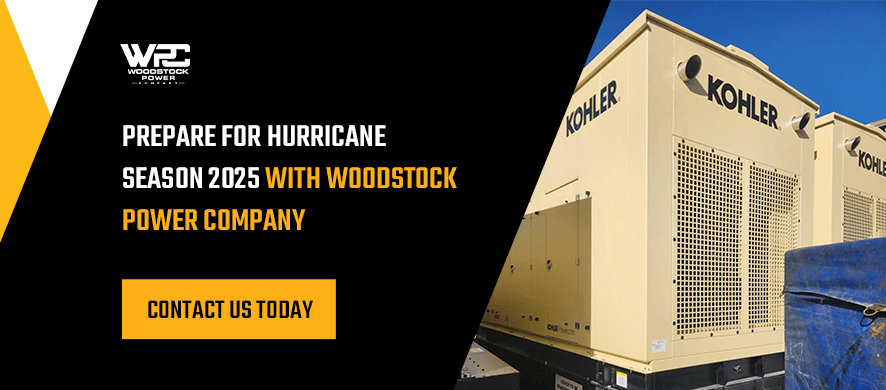

Preparing Your Building for the 2025 Hurricane Season

With the 2025 Atlantic hurricane season officially underway, now is the time for property managers, facility operators, business owners, and municipalities to assess their emergency preparedness plans. Power outages remain one of the most common and costly consequences of major storms. For commercial properties, having a reliable backup power system in place can prevent operational downtime, protect critical systems and safeguard tenant safety.
Wondering how to prepare for hurricane season? Resilience starts with a clear-eyed assessment of your building’s vulnerabilities, coordinated power strategies and investments in infrastructure that meet evolving standards. Whether managing a single facility or a multi-site network, ensuring your operations are hurricane-ready is more than good practice — it is essential.
Hurricane Season 2025 Predictions and Commercial Impact
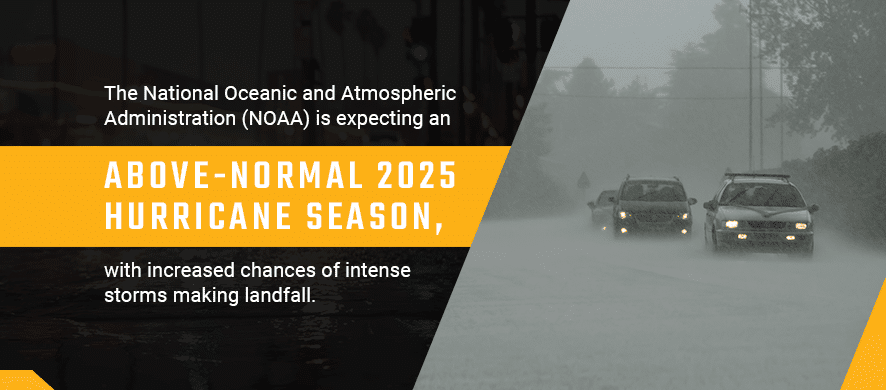
The National Oceanic and Atmospheric Administration (NOAA) is expecting an above-normal 2025 hurricane season, with increased chances of intense storms making landfall. They anticipate 13 to 19 named storms, six to nine hurricanes, and three to five major hurricanes. That means businesses in coastal and inland regions must evaluate their exposure to prolonged power outages, flooding and wind damage to electrical systems. Several environmental conditions are contributing to the heightened hurricane activity this year:
- Warmer ocean temperatures: Elevated sea surface temperatures in the Atlantic provide more energy for storm development, leading to stronger and more sustained hurricanes.
- Climate change: Long-term climate trends cause more intense hurricanes. Studies indicate that from 2019 to 2023, about 80% of Atlantic hurricanes had increased wind speeds due to warmer oceans.
- ENSO neutral conditions: The current neutral phase of the El Niño-Southern Oscillation (ENSO) lacks the wind shear that typically inhibits hurricane formation, allowing for more robust storm development.
The U.S. Energy Information Administration notes that stronger hurricanes heighten the risk of weather-related production outages in the oil industry, including refinery shutdowns along the Gulf Coast. Power outages can also incapacitate cooling systems, leading to equipment failures and potential loss of temperature-sensitive products. Buildings, especially in coastal areas, may not be equipped to withstand Category 3 hurricanes.
Hurricane Severity
In recent years, hurricanes have intensified, leading to unprecedented damage in various regions. In 2024, Hurricane Helene caused catastrophic flooding in Asheville, North Carolina, dropping nearly 30 inches of rain in three days, destroying homes, severing infrastructure and isolating the city due to damaged roads and power outages. Similarly, Georgia experienced historic damage from Hurricane Helene. Unprecedented rainfall affected areas from South Georgia to the mountainous northeast, leading to widespread infrastructure damage and power outages.
The frequency of extreme weather events has increased. North Carolina, for example, has experienced more 100-year storms since 1999, events historically characterized by a 1% chance of occurrence in any given year.
Hurricane-Rated Infrastructure
Preparing for hurricane season starts with investing in hurricane-resistant infrastructure, which is crucial for safeguarding commercial properties. Building codes have evolved to improve the resilience of structures in hurricane-prone regions. For example, Florida’s stringent building codes require features like impact-resistant windows, reinforced roofs and hurricane straps to secure roofs to walls.
Commercial Power System Preparation and Assessment
Consider a commercial generator as a critical step in hurricane season preparation. Generators provide immediate power when the grid fails, keeping your essential operations online. If your building has a generator, use this checklist to ensure it is ready to operate when you need it:
- Load analysis: Schedule a load test to verify the generator’s performance under pressure.
- Fuel planning: Inspect the fuel levels, filters and battery health. Secure a stable fuel supply and confirm runtime capabilities.
- Transfer switch testing: Confirm the automatic transfer switch (ATS) operation.
- Routine maintenance: Review service records and address deferred maintenance.
- Unit safety and stability: Secure the unit to withstand high winds and flying debris, especially when relying on portable generators.
Commercial/industrial generators deliver smooth power flow and high efficiency, making them ideal for commercial-scale systems. Their design reduces voltage drop over long distances and ensures equipment like compressors and motors run at full capacity, which is critical in hurricane-exposed operations. During extended outages, the Environmental Protection Agency (EPA) Tier 2 and 4 emission standards may apply to your standby generator operations depending on your location, though oftentimes in emergencies, these restrictions may be lifted.
Fuel Considerations and Supply Chain Planning
Fuel considerations are central to maintaining generator reliability during prolonged outages. Supply chain disruptions, infrastructure damage and high demand can all affect fuel availability, making preseason planning essential. Whether you operate a diesel or natural gas generator, each fuel type presents distinct benefits, regulatory requirements and logistical concerns:
| Factor | Diesel Generators | Natural Gas Generators |
| Availability | Delivered by truck and can be stockpiled on-site. | Supplied via utility pipeline, which may be disrupted in disasters. |
| Startup and Response | Fast startup, which is ideal for standby use. | Slightly slower start, more suitable for continuous use. |
| Runtime | Limited by tank capacity, requires refueling. | Unlimited, assuming the pipeline supply remains intact. |
| Maintenance | Requires regular fuel conditioning. | Lower fuel degradation risk. |
| Emissions | Higher NOx and particulate emissions. | Cleaner burning often meets local emissions regulations more easily. |
| Infrastructure Vulnerability | Independent from public utilities. | Pipeline outages can occur from storm-related damage. |
Facility-Wide Integration: Beyond Power Generation
Complex operations, especially those relying on precision HVAC and data center uptime, require an integrated approach to power continuity. Coordinating backup power with mechanical systems, electrical distribution and IT infrastructure ensures operational stability during and after a storm. Integrated turnkey systems and suppliers that offer end-to-end solutions ensure consistency, code compliance and single-point accountability. Look for a provider offering:
- Site-specific load analysis across HVAC, lighting, data and life safety systems.
- Design, permitting, installation and commissioning of generators, ATS and fuel systems.
- Electrical distribution design that prioritizes critical loads and minimizes downtime.
- Nationwide logistics and technical coverage for multi-site operations.
Prepare for Hurricane Season 2025 With Woodstock Power Company
Business continuity during hurricanes hinges on power strategies that go beyond basic generation. With the rising frequency and intensity of hurricanes driven by climate change and warmer ocean temperatures, it is crucial to plan proactively. As you go through things to do to prepare for a hurricane, remember to invest in a turnkey power solution and align with a trusted provider to ensure your facility stays safe, stable and online, no matter the forecast.
Headquartered in Philadelphia, PA, and operating nationwide, Woodstock Power offers a full inventory of commercial generators for sale and flexible rental generator solutions to support your short-term or seasonal needs. As used generator specialists, we offer these machines at significantly lower prices compared to brand new, retail pricing. For buildings with an aging system or increased power demands, we also provide options to trade in or upgrade your existing generators. We also offer generator maintenance services and emergency support across the region to keep your system running when it matters most.
Contact Woodstock Power Company today or call us at 610-658-3242 for more information and to find the generator your facility needs for the 2025 hurricane season.
Follow us on LinkedIn, YouTube, Facebook and X to learn more about commercial generators.