

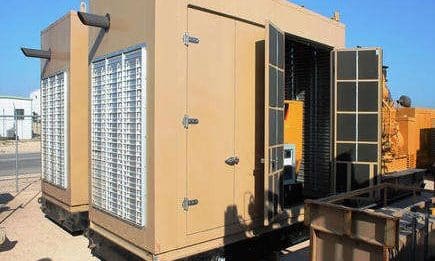
Due to the size and weight of a commercial generator, decommissioning and removal can be a difficult task. Commercial generators and generators used for industrial applications or used for backup emergency power for facilities are often very large and heavy, which results in a very involved process in order to safely remove them from sites.
Before decommissioning and removing a commercial generator, businesses will need to determine what they would like to do with the generator. Is the generator simply being removed or is the plan to sell your used generator and replace it with a newer model?
The next step would be to assess whether you have the appropriate staff to handle decommissioning and removal of a commercial generator. Decommissioning and removing a generator is not simply disconnecting cables and removing the generator from the site. There are many factors that require thorough planning and technical expertise from highly trained professionals. If your business is not equipped or lack the proper staff needed for the process, you will need to will need to work with a company that can properly handle the work involved.
Whether you choose to do this in-house or partner with Woodstock Power Company for this task, we have provided a general guideline for the decommissioning and removal process of a commercial generator.
Site Inspection
- Evaluate work site to identify the best course of action to safely and efficiently remove generator
- Thoroughly review current electrical system -> including generator condition and specifications
- Assign roles and responsibilities to ensure all critical tasks are covered during the scope of the project
Review
- Inspect & document all equipment at the facility to accurately calculate weight & size of equipment
- Record all details and specifications about the generator, such as generator phase, kW/kVA, amps, hertz, voltage, hours, etc.
- If applicable, assess the generator room, including configuration, ease of access, breaker panels, wiring and site cabling, and be sure to including any additional on-site equipment
- Secure the proper equipment and staff needed for rigging, crane lift, and shipping
- Consult local authorities to ensure that all regulations and industry best practices are being enforced
- Review the scope of work and verify the timeline for the process to be carried out
- Coordinate with any vendors, contractors, suppliers that may be involved with the project, including disposal of hazardous materials & waste
Decommissioning & Removal
- Coordinate with on-site staff to ensure all tasks are carried out properly
- Disconnect power from the main breaker and all connected equipment
- Remove all electrical wire and conduits
Dispose of Hazardous Waste & Materials
- Assigned party will be required to carefully remove and properly dispose of any hazardous waste or materials
Completion
- Coordinate logistics for any equipment that needs to be relocated
This is to serve solely as a general guideline, as every commercial generator decommissioning and removal process can vary from site to site, such as data centers, which require additional steps throughout the process. The key is to carry out the best course of action for your facility in order to mitigate downtime and prevent damage to equipment, staff, and site environment. Creating processes that can reduce any downtime (both planned and unplanned), as well as ensure a robust workflow process will help projects run smoothly.
FAQs
What are the key steps in decommissioning an industrial generator?
Decommissioning includes site inspection and access planning, safely draining all fluids, fuel, oil, and coolant, disconnecting the unit from the electrical system including the automatic transfer switch, securing environmental and local air quality permits, physically removing the unit with cranes or heavy lift equipment, and properly disposing of or reselling the unit and its components, including any associated freight.
What environmental regulations apply to generator decommissioning?
Decommissioning must comply with EPA and local air quality regulations for handling hazardous materials, including diesel fuel, lubricating oil, coolant, and batteries. You will also need documentation of fluid disposal, recycling receipts, and permit cancellations to limit future environmental liability.
Can I get value back from decommissioning an old generator?
Often, yes. Depending on the unit’s age, brand, and condition, a used generator buyer like Woodstock Power may purchase your decommissioned unit outright, offsetting removal costs. We handle the logistics and can provide a free appraisal before the project begins.