
How Facilities Should Prepare for 2025-2030 Grid Instability
Across the United States, millions of people and businesses rely on the grid each day. While a reliable power supply delivered by the grid may be taken for granted right now, that’s likely to change over the next few years. The U.S. Department of Energy’s Report on Evaluating U.S. Grid Reliability and Security has found that without major changes, U.S. grid reliability will reach unacceptable levels in many regions.
4 Challenges Facing the Grid
The grid is currently meeting these challenges overall. However, this is likely to change by 2030.
1. Firm Generation Capacity
A key cause of the predicted U.S. grid crisis is that 104 GW of firm generation is marked down for retirement. To replace it, 209 GW of new generation is planned by 2030. However, only 22 GW of that is firm generation, which can reliably run around the clock, resulting in a 79% loss of firm generation sources.
Altogether, many regions could experience over 100 times more outage hours each year.
2. Extreme Weather Events
From 1980 to 2024, there were 403 extreme weather events in the U.S., an average of nine per year. However, 115 of those events occurred from 2020 to 2024 at an average of 23 per year. This increase in extreme weather events has had a profound effect on the grid, causing 80% of power outages from 2000 to 2023.
If extreme weather events continue to occur more frequently, the number of outages could rise in turn, leading to higher grid instability.
3. Increased Demand
Over the next five years, it’s expected that electricity usage will increase by 5.7% annually. Data centers are a leading cause of this rise, with 54% of forecast peak load growth coming from them. These data centers are often based on newer technologies, such as AI and crypto mining. Around 18% of the peak load growth will come from manufacturing facilities, and 6% will come from the oil, gas and mining sectors.
This large increase in demand will require an increase in supply at a time when firm generation sources are being reduced.
4. Cybersecurity Vulnerabilities
Cybercrime is a threat to any entity, business or individual, and the grid is no exception. Due to its aging infrastructure, the grid may face an even higher risk than usual. It wasn’t built with modern cyber threats in mind.
In 2024, the North American Electric Reliability Corporation reported that around 60 new cyberthreats emerged against the grid every day. Costly and challenging solutions, such as regular patching and security upgrades, are required to deal with these threats.
Until the grid is upgraded with modern infrastructure, this problem is unavoidable. The potential effects of a successful cyberattack on the grid are widespread. Many facilities, from data centers to hospitals, may be unable to operate, leaving local areas without critical services.
How a Failing Grid Could Impact Businesses
Businesses that have to work with an unreliable energy supply could face several disadvantages, such as:
- Increased expenditures from downtime: If a business can’t operate at full capacity, its ability to generate profit is reduced while its costs might increase.
- Equipment damage: From computers to heavy machinery, many pieces of equipment can become damaged from sudden power loss.
- Data integrity issues: Sudden power loss could compromise data storage processes, creating uncertainty about whether data was correctly saved.
- Patient safety concerns: Power loss during critical healthcare treatments like surgery could endanger patients.
- Compliance violations: From data integrity to workplace safety, there are many compliance issues a business could fail to meet when operating with an unreliable energy source.
- Reputational damage: A business that can’t operate reliably won’t retain the trust of its customers or clients.
Putting Together a Grid Resilience Strategy
The best way that businesses and facilities can prepare for the 2025-2030 grid instability is to create a grid resilience strategy. This plan will help your business operate even when it’s not receiving energy from the grid.
Creating a grid resilience strategy involves these steps:
- Conduct a risk assessment based on your business’s location and operation type.
- Identify additional power supply systems, whether that’s receiving supply from a different substation or an on-site generator.
- Implement automated transfer switches (ATS) that automatically switch your power supply when one fails.
- Add generator paralleling capabilities that allow you to scale your power supply as needed.
- Store sufficient amounts of fuel to allow your business to operate through prolonged periods of downtime.
- Inspect, test and maintain your power resilience system regularly.
- Train your staff on how to deal with power disruptions.
Choosing the Right Backup Power Solutions
While some businesses may prefer to get power from a second substation, this form of backup power has a downside. What affects one substation — be it extreme weather or a cyber attack — could affect another substation in the same way. That’s why using an on-site generator can be highly beneficial. With a power source completely off-grid, you remove risks that using the grid could create.
However, it’s important that your equipment fits your needs. In order to find the right equipment for your business, you’ll need to consider different factors of your backup power solution.
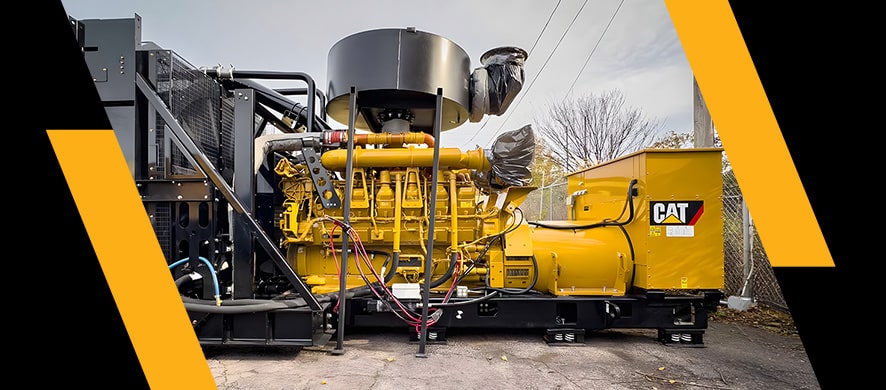
Generator
Consider these aspects when selecting a generator:
- Fuel type: Decide whether you’d prefer the environmental benefits of natural gas or the independence from the grid that diesel fuel can easily provide.
- Size: Calculate your business’s load size to determine what generator size you require.
- Paralleling capabilities: Ensure your generators can operate in parallel.
- Emissions: Consider how a generator could affect environmental compliance by the type and volume of emissions it produces.
ATS
Make sure your ATS meets the following criteria:
- It’s compatible with your generators.
- It can use your preferred transfer method.
- It’s suited to the environment you’ll use it in.
- It has all the necessary control features you require, such as adjustable time delays, exerciser functions and event logging.
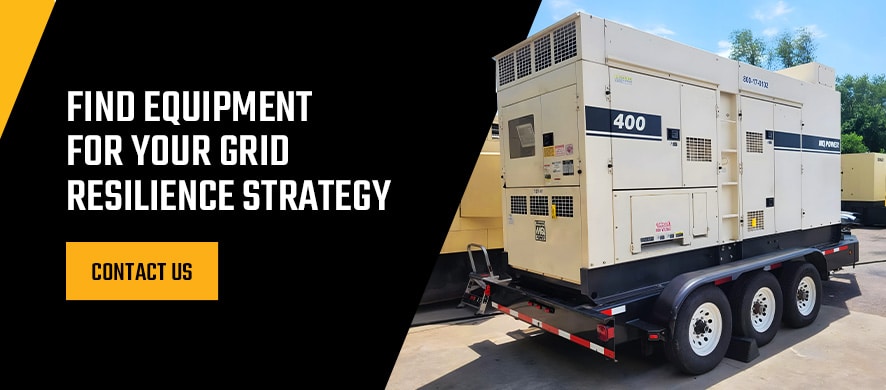
Find Equipment for Your Grid Resilience Strategy
Finding the perfect generator and ATS for your needs requires a lot of consideration. At Woodstock Power, we aim to make the selection process easier.
We supply a vast range of premium generators and ATS inventory, with a central focus on customer satisfaction and cost savings through our surplus inventory. Rely on our experienced team to help you find the ideal equipment for your grid resilience strategy.
With headquarters in Philadelphia, PA, we serve local and nationwide businesses. To find out more about how our products can help you prepare for the future, contact us today.